
Driving Under Influence (DUI): A National Debt Paid in Blood. It is Time for Real Accountability
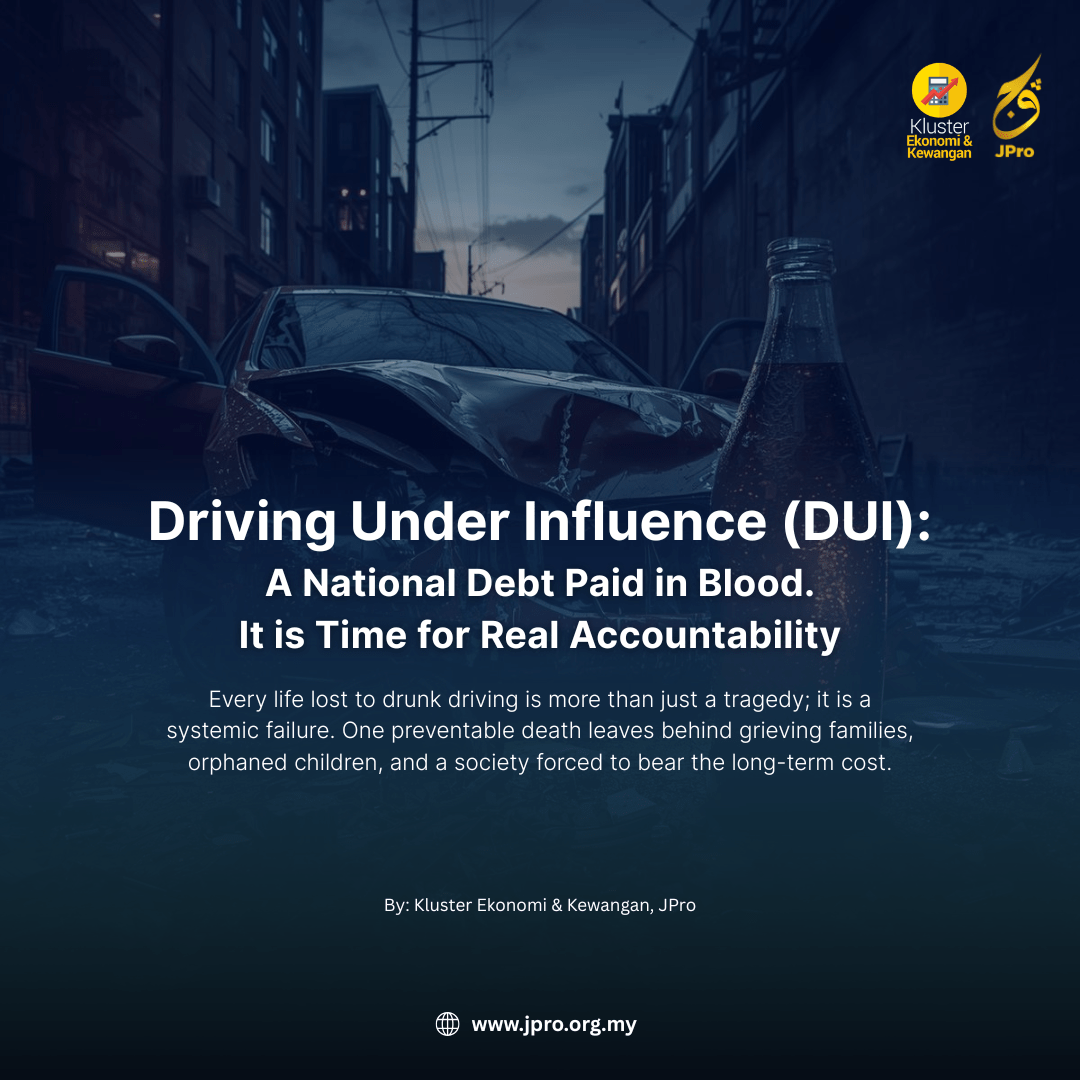
Every life lost to drunk driving is more than just a tragedy; it is a systemic failure. One preventable death leaves behind grieving families, orphaned children, and a society forced to bear the long-term cost.
In Malaysia, road accidents cost an estimated RM20 billion annually, encompassing hospital treatments, infrastructure damage, and the loss of productive human capital. But beyond the numbers lies a deeper injustice; when a breadwinner is killed, the financial burden often shifts to the family, and ultimately the country.
It is a high time to rethink our approach.
Punishment alone is not enough. While we support stronger deterrence including longer jail terms and even the consideration of the death penalty in the most severe cases, justice must also restore what has been lost to the victim’s family.
This is where compensation (diyat) becomes critical.
In Islamic jurisprudence, diyat ensures that when a life is taken due to negligence, the perpetrator bears financial responsibility to the victim’s family. It ensures that the burden of loss does not fall on the innocent.
Importantly, this principle already exists in modern legal systems.
Japan, for example, applies a structured compensation model where families of victims are entitled to damages that reflect the true economic loss of life, which includes the victim’s future income, age, and dependents. If a young professional or a skilled worker is killed, the compensation reflects the lifetime income that the family has lost. This ensures that justice is not just a symbolic, but materially meaningful.
Malaysia must build on this principle by formalising a modern diyat framework that is both just and practical:
• Mandatory compensation (diyat) to victims’ families in all fatal DUI cases, reflecting actual economic loss
• A structured payment system, introducing a mandatory DUI liability coverage in motor insurance, ensuring victims are compensated even if the offender lacks means
• Continued liability on offenders, including instalment payments, wage deductions, or asset recovery where applicable
• Risk-based insurance and penalties, where high-risk behaviour such as drunk driving leads to significantly higher premiums and financial consequences
• A national victim protection fund as a last resort, ensuring no family is left unsupported
At the same time, stronger prevention and accountability must go hand in hand:
• Dram Shop Laws — holding establishments legally and financially liable for serving alcohol to visibly intoxicated individuals who later cause fatal accident
• Alcohol-Free Zones in high-risk or majority-residential areas and increasing sobriety checkpoints within a 5th-kilometer radius of entertainment hubs
• Preventive technologies — integrating advanced technology like Mitsubishi Electric’s Alcohol Detection System. This system uses high-precision cameras and sensors to detect a driver’s breath and facial flushing, preventing the vehicle from starting if intoxication is detected.
This is all about shifting the burden back where it belongs; those who cause and enable the harm, not on grieving families and taxpayers.
A just system must do three things: deter, punish, and restore.
We cannot undo the lives lost. But we can ensure that justice is not incomplete.
The question is simple:
Do we continue reacting after tragedies happen? Or do we build a system that truly protects lives and upholds accountability?
Safety. Justice. Responsibility. Malaysians deserves all three.
Prepared by
Kluster Ekonomi & Kewangan,
Jabatan Profesional Muda (JPro)
March 31, 2026