
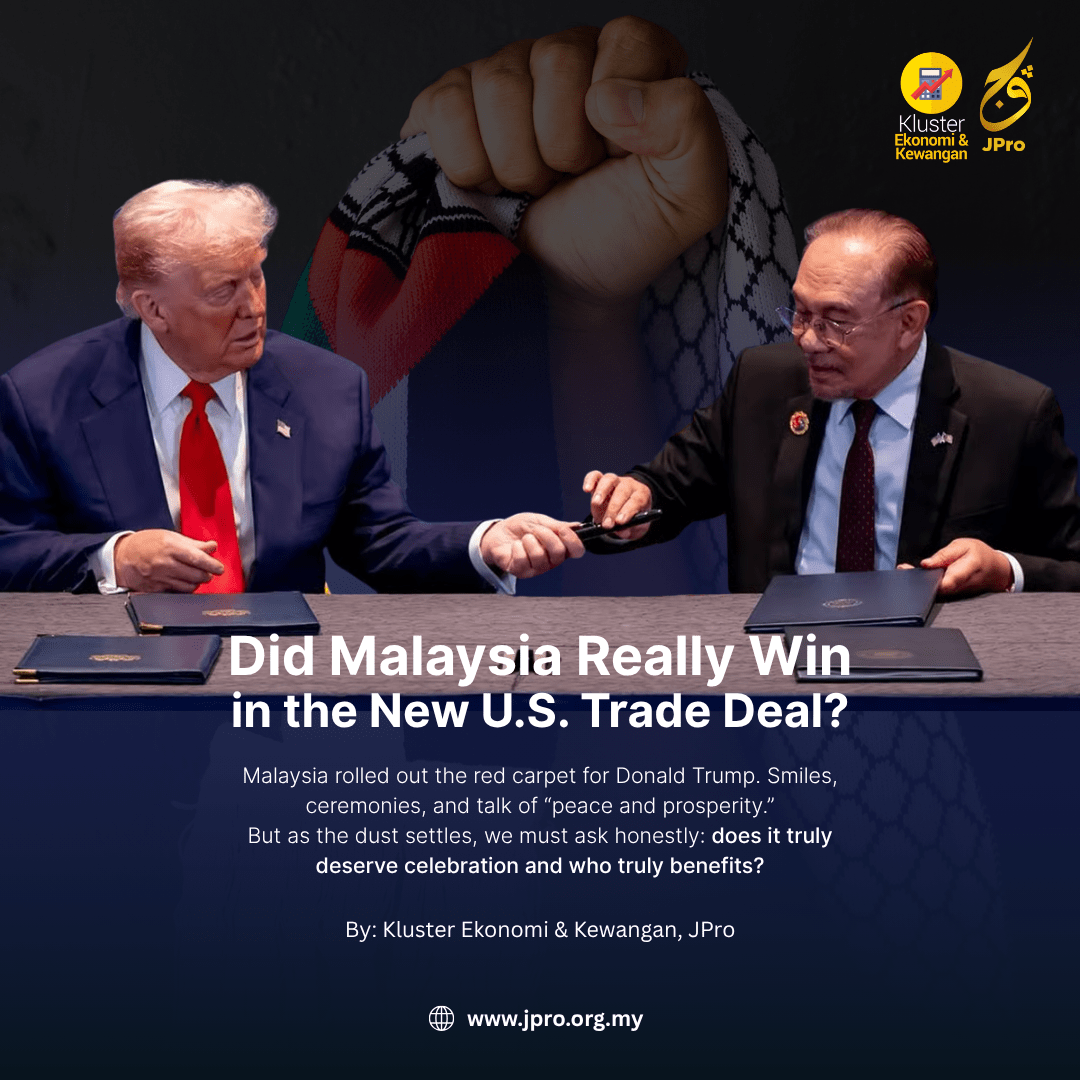
Malaysia rolled out the red carpet for Donald Trump. Smiles, ceremonies, and talk of “peace and prosperity.”
But as the dust settles, we must ask honestly: 𝗱𝗼𝗲𝘀 𝗶𝘁 𝘁𝗿𝘂𝗹𝘆 𝗱𝗲𝘀𝗲𝗿𝘃𝗲 𝗰𝗲𝗹𝗲𝗯𝗿𝗮𝘁𝗶𝗼𝗻 𝗮𝗻𝗱 𝘄𝗵𝗼 𝘁𝗿𝘂𝗹𝘆 𝗯𝗲𝗻𝗲𝗳𝗶𝘁𝘀?
Under the new US–Malaysia Reciprocal Trade Agreement, Malaysia agreed to:
 Eliminate or reduce tariffs to almost all U.S. goods; from cars to medical devices. Effectively opening our market to full competition. Exempt U.S. tech giants from our digital service tax. Remove export limits on rare earth and critical minerals — resources vital to our nation’s future industries.
In return, the U.S. merely capped its tariffs of 19% at the same level already extended to other ASEAN countries and offered “investment intentions” that are neither binding nor guaranteed.
In fact, Malaysia is now committed to purchasing over USD150 billion in American goods, while the promised inflow of U.S. capital stands at only USD70 billion.
The risk is clear:
With no import tariffs, local manufacturers and SMEs will face unequal competition from cheaper U.S. goods, while Washington insists on a “level playing field”; a phrase that too often benefits those already stronger.
Economically, we spend more than we gain.
Strategically, we lose leverage over our own resources and digital policies.
Diplomatically, we appear grateful for an arrangement that treats us as a buyer, not a partner.
We welcome trade and cooperation, but not at the expense of sovereignty or fairness.
And while we understand the demands of diplomacy, it is painful to see warm celebration extended to a leader whose open support for Israel’s genocide against Gaza continues to offend the conscience of the world.
Malaysia deserves partnerships that strengthen our economy and uphold our dignity.
𝗧𝗵𝗲 𝗾𝘂𝗲𝘀𝘁𝗶𝗼𝗻 𝗶𝘀, 𝗱𝗶𝗱 𝘁𝗵𝗶𝘀 𝗮𝗴𝗿𝗲𝗲𝗺𝗲𝗻𝘁 𝗮𝗰𝗵𝗶𝗲𝘃𝗲 𝗲𝗶𝘁𝗵𝗲𝗿?